Tuesday, December 1, 2015

Media. Dylan. America.

Additional Article on the depiction of white shooters in the media:

http://everydayfeminism.com/2015/07/the-media-white-privilege/

Media. Dylan. America.

Washington post article about Dylan Roof:
https://www.washingtonpost.com/posteverything/wp/2015/06/18/call-the-charleston-church-shooting-what-it-is-terrorism/

This article, written by an African American professor, Anethea Butler, shared thoughts on the rhetoric around Dylan Roof. As many people know, Dylan Roof is the white, mass shooter of 9 African Americans at a prayer meeting. Roof's specifically targeted this predominantly African American church that is rich in history of the progression of the black community. 

This article addresses the different word choice the media uses when it is a white shooter versus a minority offender. Words such as, thug or gangster are associated with a black shooters. A Muslim offender is immediately thought of as a terrorist. And the rhetoric around white shooters is usually mentally ill or a loner. Dylan Roof was extended that same framing despite the fact he intentionally sought out a certain group to bring about fear and intimidation for a political message, the very definition of a terrorist. 

In the article, Butler draws several instances where white shooters are categorized as just lone shooters or separate instances or a bad apple. With that mindset, the media will describe these shooters with certain words that are not afforded to people of color. 

James Holmes, a 25-year old man who went on a killing spree, was described in the media from his childhood. As not being likely to do something so horrific or was a 'smart-kid.' The humanization of white shooters begins immediately.


Black people are not afforded this same luxury. Victims are dehumanized or bolstered. For instance, Tamir Rice a 12-year-old boy who was shot and killed by police while playing with a toy gun was described as a young man. In no way is 12-year-old, a preteen a young man.


The media has a responsibility to create a new frame. A more realistic frame. White offenders can no longer be given such cushioned rhetoric because it shapes public opinion further dividing. Truth-telling is imperative in media, and it will start when the media calls a spade a spade, and a terrorist a terrorist.

Monday, November 30, 2015

Media. Race. Crime.

Article with research:

Here are a few of the highlights of the text below (I suggest reading the research as well):

"Racial distortions are pervasive in crime news. A study in Los Angeles found that 37% of the suspects portrayed on television news stories about crime were black, although blacks made up only 21% of those arrested in the city.

"By over-representing whites as victims of crimes perpetrated by people of color, crime news delivers a double blow to white audiences' potential for empathetic understanding of racial minorities," the study said.

"Crime coverage also betrays subtler racial differences. A study of television news found that black crime suspects were presented in more threatening contexts than whites: black suspects were disproportionately shown in mug shots and in cases where the victim was a stranger. Black and Latino suspects were also more often presented in a non-individualized way than whites – by being left unnamed – and were more likely to be shown as threatening – by being depicted in physical custody of police."

"Another study found that whites represented 43% of homicide victims in the local news, but only 13% of homicide victims in crime reports. And while only 10% of victims in crime reports were whites who had been victimized by blacks, these crimes made up 42% of televised cases. These disparities exist nationwide and are greatest when the victim's race is taken into consideration."


 Prince, R. (2014, September 4). How Media Have Shaped Our Perception of Race and Crime. Retrieved  from http://www.theroot.com/blogs/journalisms/2014/09/how_media_have_shaped_our_perception_of_race_and_crime.html 

Media. Race. Crime.

Article with research:

The articles discuss the perception of race and crime through media. The media's portrayal of race is extremely influential in forming the mindsets views of the public. The media can further perpetuate stereotypes both positive and negative through certain rhetoric, framing and biases. The articles are based on a study that research analyst, Nazgol Ghandnoosh, Ph.D., conducted. The research topic is "Race and Punishment: Racial Perceptions of Crime and Support for Punitive Policies," in which he has been gathering information over the past 20 years. He drew attention to the fact that through media Blacks and Latinos are disproportionately displayed more in a criminal manner than whites, especially in the sense of a black suspect and a white victim. His research concludes that if the media reports within the actual trends of what is happening (correct proportions) it will eliminate the feeling of unreal "crisis."


 Prince, R. (2014, September 4). How Media Have Shaped Our Perception of Race and Crime. Retrieved  from http://www.theroot.com/blogs/journalisms/2014/09/how_media_have_shaped_our_perception_of_race_and_crime.html 

Tuesday, November 24, 2015

Additional Links about Walter Scott

Before the video surfaced:

http://www.postandcourier.com/article/20150404/PC16/150409635/1005/man-shot-and-killed-by-north-charleston-police-officer-after-traffic-stop-sled-investigating

After the video surfaced:

http://www.postandcourier.com/article/20150407/PC16/150409468

An article of what would have been without the video:

http://www.huffingtonpost.com/2015/04/08/walter-scott-shooting-without-video_n_7024404.html

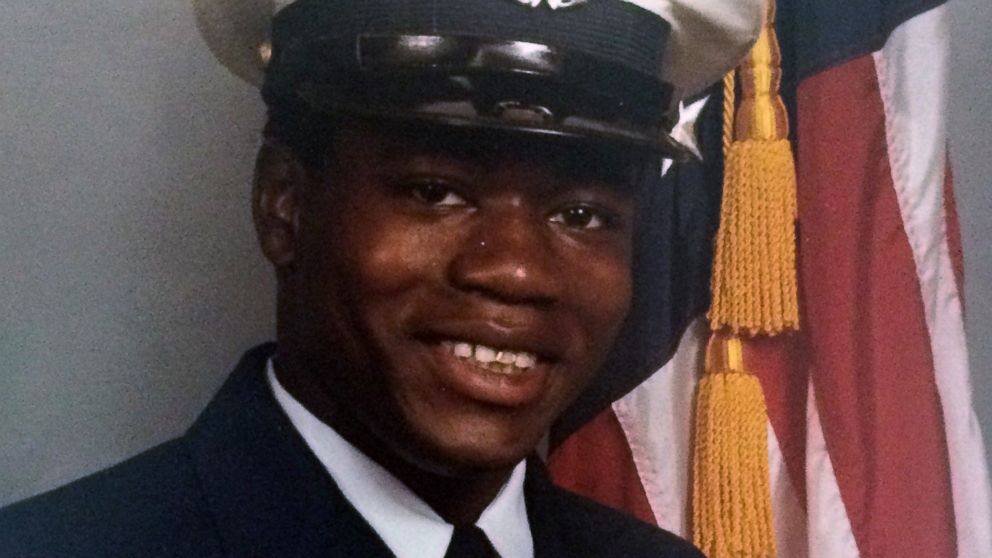
Walter Scott when he served on the U.S. Coast Guard
Walter Scott

Media. Walter. America.

Media responsibility to truth-telling. Is there any?
              The media should have a responsibility to search for the whole story before just reporting one side. With investigative journalism, the search for the truth is imperative to putting out a story correctly, the first time. The media seems to want to put out a story the fastest instead of being the most accurate. In one of the Discussion posts in the Mass Media and Politics course I drew attention to a certain instance when investigative reporting was not done, thus leading to the wrong story. The story is of Walter Scott. The Post and Courier, immediately reported what the police gave them and stated that a scuffled occurred between the two men causing officer Michael Slager to shoot and kill Walter Scott. Instead, on a video that was taken by a bystander, it showed that Walter Scott was fleeing, shot in the back and no scuffle occurred.

              In no way am I saying that it is completely the media's fault for reporting a false story. Of course, they received false information, but it is their duty to search for more facts to ensure that the story they are sharing is indeed the truth.  The media too often shares a certain rhetoric of black men shot by the police without searching if there is more to the story. Instead, the media needs to look for more facts and verify sources. The police can no longer be their sole source and be taken as truth, but rather take the information and look into it themselves. Walter Scott was painted as a man with a long criminal record, when in fact he had warrants out for his arrest for child-support payments. His name and character was defamed before the proper investigative reporting was even done. Scott was also a former Coast Guard officer but none of that was told until the video surfaced. If the proper investigative journalism would have occurred the original story of Walter Scot could have been the first story the public heard. 

Tuesday, September 29, 2015

Additional Links on Ahmed Mohamed:

Article from Daily Mail


Mark Zuckerberg's, the founder of Facebook, statement

Presidential candidate, Hilary Clinton's tweet in support of Ahmed

 American systems engineer at NASA's Jet Propulsion Laboratory, Bobak Ferdowsi's tweet in support of Ahmed.